Monday, October 12, 2026
Reinventing Luxury Packaging Through Biomimicry
Edition Spéciale by LUXE PACK

Discover how biomimicry is transforming luxury packaging innovation by combining eco-design, bio-based materials and sustainability, turning planetary boundaries into powerful drivers of creative inspiration.
At a time when environmental challenges are shaping the future of the industry, biomimicry is emerging as an unprecedented source of innovation. Drawing on 3.8 billion years of evolution, this approach offers sustainable packaging professionals tangible ways to lightweight structures, functionalize surfaces and develop regenerative materials. Far from being merely an aesthetic trend, bio-inspired design makes it possible to create packaging that is more resource-efficient, more desirable and fundamentally more responsible, where sophisticated structural design replaces an abundance of material.
Luxury, with its ability to celebrate craftsmanship, expertise and long-term value, provides an ideal field for these breakthrough technologies. By drawing inspiration from nature and its systems, brands can now address the dual challenge of resource scarcity and the desirability of prestige objects. This transition requires a fresh perspective on the living world, looking beyond shapes alone to understand the processes and systems that can be integrated harmoniously into a global circular economy.
Understanding Biomimicry: A Strategic Source of Packaging Innovation
Biomimicry consists of translating the operating principles of living systems into sustainable industrial solutions. For the packaging sector, Laura Magro of CBIOS identifies three fundamental areas: structural lightweighting, surface functionalization and the very nature of the materials themselves.
Living organisms create an extraordinary diversity of properties from a limited number of resources through highly sophisticated microarchitectural structures. Where traditional industry adds layers of polymers, nature relies on geometry.
Examples of this ingenuity are everywhere. From aquaporins capable of filtering water with unrivalled efficiency to whale baleen optimized for extraction, every natural mechanism has the potential to inspire innovation and intellectual property.
Whether through biotechnological processes or direct partnerships with living organisms, biomimicry enables a shift from extractive manufacturing toward generative production. It offers a “new lens” through which to rediscover the pleasure of learning from living systems and to transform constraints into enduringly inspiring design solutions.
A Technical Perspective: Natural Microstructures Supporting Bio-Based Materials
The science of bio-based and bio-inspired materials reveals remarkable mechanical performance.
A cross-section of bamboo, for example, reveals a controlled gradient of porosity that provides exceptional lightness and strength, outperforming many metal alloys in certain respects. Similarly, abalone shell, despite being composed of approximately 95% mineral material, achieves remarkable toughness through a sophisticated multilayer arrangement of organic matter.
This ability to generate outstanding emerging properties from simple materials lies at the heart of biomimicry.
In collaboration with organizations such as Citeo, it becomes possible to identify the weaknesses of conventional packaging and develop bio-based alternatives. These microstructures can eliminate the need for polluting chemical additives while maintaining, or even improving, the protective and preservation functions essential to luxury packaging.

Translating Nature’s Ingenuity into Industry: Eco-Design and the Challenges of Scaling Up
Moving from the research laboratory to industrial production requires methodological rigor and strong industrial partnerships.
Companies such as Shellworks now use bacteria to produce PHA, or polyhydroxyalkanoate, a biodegradable polymer within remarkably short production cycles. Unlike conventional PLA, PHA offers far greater flexibility at end of life, although its plastic-like appearance can still create perception challenges among consumers accustomed to traditional luxury codes.
At the same time, Carbios has spent more than a decade developing a revolutionary enzymatic recycling process that transforms used plastic back into virgin-quality raw material, mimicking natural decomposition cycles.
In paperboard packaging, origami-inspired concepts based on the folds found in leaves or insect wings can reduce the amount of material required while improving resistance to impact.
Artificial intelligence is now accelerating these developments, helping optimize every stage of bio-inspired manufacturing. This systemic approach is enabling a new generation of packaging innovations in which resources such as onion skins or algae can replace petroleum-based polymers.
Luxury Reinvented: Between Sensory Experience and Environmental Performance
The future of prestige packaging is no longer defined by an abundance of material, but by sensory richness and the sophistication of its construction.
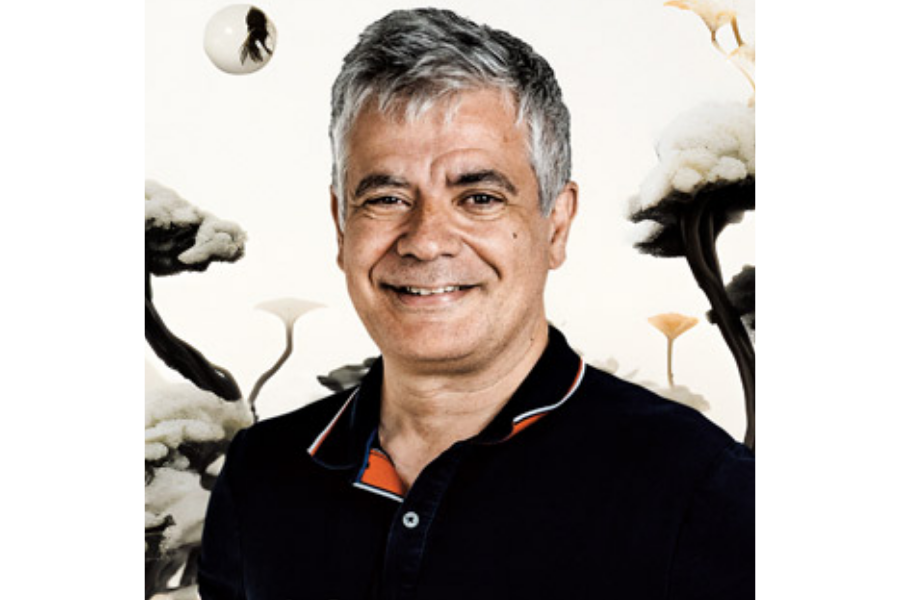
Tariq Cheikhchak emphasizes the multifunctional nature of living systems: human skin, like the outer layer of a fruit, protects while simultaneously communicating through color, scent and touch. This perspective transforms packaging into a living interface between product and user.
Packaging shaped according to origami principles or inspired by the nests of weaver birds demonstrates how simple materials can be transformed into robust and elegant architectures.
By following natural lines of force, much like the internal structures of bird bones, designers can achieve maximum strength with minimal mass.
This pursuit of essentials redefines luxury as a precise balance between traditional craftsmanship and advanced technology, where every detail serves both an ecological and an aesthetic function.
Innovative Manufacturing Processes: The Rise of Soft Chemistry
One of the most promising fields of biomimicry lies in low-energy manufacturing processes.
Producing glass at room temperature through sol-gel processes, directly inspired by the way marine organisms synthesize silica, opens the door to combinations of materials that were previously impossible, such as integrating glass with flax fibers.
These bio-precipitation processes can also enable beneficial bacteria to be encapsulated within materials, creating self-healing functions or controlled-release systems for cosmetic active ingredients.
Although these technologies remain largely at the R&D stage, they demonstrate the potential to radically disrupt energy-intensive thermoforming processes.
The ultimate ambition is to achieve production efficiency comparable to that of a forest: a system powered by solar energy in which waste becomes a resource.
Industrial Scaling: Key Drivers and Planetary Boundaries
The widespread adoption of biomimicry requires a strategic compromise between the differentiation sought by luxury brands and the standardization required by recycling systems.
Circularity, which is intrinsic to living systems, means moving away from a linear consumption model toward one in which material flows remain in continuous circulation. This requires compostable and recyclable solutions to be integrated at an early stage, despite current regulatory uncertainty.
Energy consumption is another major lever for transformation.
Moving away from high-temperature processes toward low-energy, bio-based alternatives, including the use of hemp or flax, can reduce environmental impact from the very beginning of a product’s lifecycle.
3D and 4D printing, combined with electron microscopy, can reproduce living structures at nanometric scales, optimizing material use while delivering highly refined finishes without varnishes or additional additives.
Conclusion: Toward Integrated and Regenerative Packaging
Biomimicry is emerging as a key pathway toward packaging that is both sustainable and highly desirable.
By breaking down the silos between R&D, CSR and procurement teams, it encourages new synergies around performance and eco-design.
Significant investment in biotechnology startups will be essential to move the market toward regenerative solutions.
By cultivating a genuine form of “interspecies diplomacy” and leveraging the most advanced digital tools, the luxury industry has the opportunity to build systems in which every package becomes an invitation to experience sustainable beauty.