Sunday, March 22, 2026
The Luxury of Tomorrow: L'Oréal Luxe and the Paradigm of Sustainable Desirability
LUXE PACK Monaco

The luxury sector is undergoing a profound structural transformation, where corporate social responsibility is no longer a mere add-on, but the very core of its new identity. Faced with consumers seeking experiences capable of “repairing the body and sustainably elevating the mind,” prestige brands are redefining the codes of opulence. This article deciphers the strategic vision of L'Oréal Luxe and explores how technical innovation enables the creation of sustainable luxury capable of bridging the gap between ecological intention and purchasing behavior.
The refillable product revolution: A new standard of prestige
The integration of refillable products is the cornerstone of this transformation. The objective is to turn the iconic bottle—an object of desire par excellence—into a long-lasting container. The environmental benefits of this shift are both significant and measurable. For example, refilling a 100 ml Prada Paradoxe bottle instead of purchasing a new standard format reduces glass use by 44% and metal and plastic use by 67%. At Biotherm, adopting refills leads to a 61% reduction in polymer consumption.
This shift has required a complete industrial overhaul, moving away from crimped pumps in favor of screw-on systems. Today, major market pillars such as Lancôme La Vie Est Belle, Mugler, and Yves Saint Laurent Libre have already adopted this model. The technical challenge lies in ensuring fragrance integrity and microbiological safety while offering a seamless and premium refill experience for the customer.
“Luxury must combine desirability and sustainability; it is through this alliance that we redefine high-end beauty.” — Marie-Pia Schlumberger
Eco-design and innovation serving recyclability
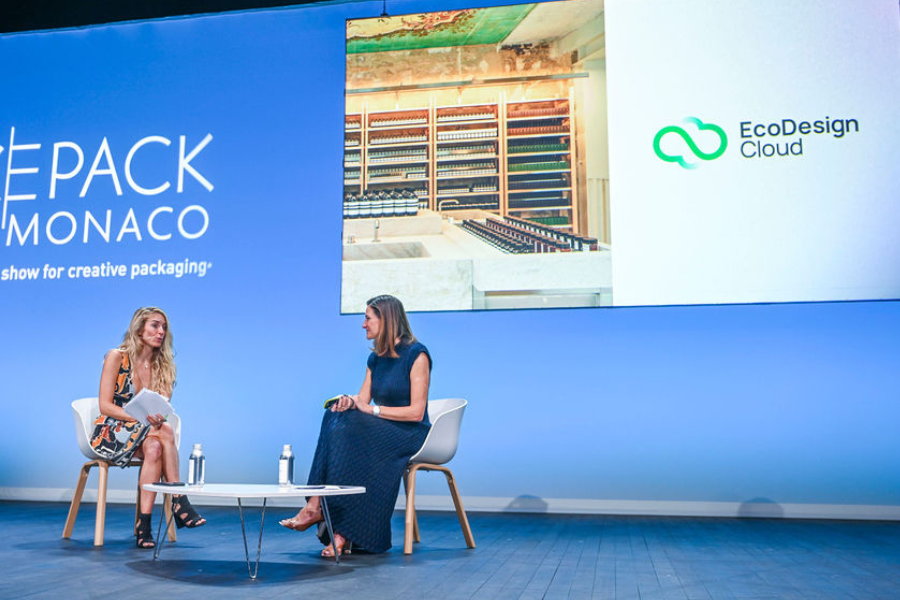
The alliance between aesthetics and environmental responsibility relies on major technological breakthroughs. Eco-design is now driven by digital tools such as EcoDesign Cloud, which allow precise measurement of the impact of each component. This optimization has reduced carbon emissions from merchandising by 40% while generating significant financial gains, proving that sustainability is a driver of economic performance.
A striking example of this innovation is the Lancôme Absolue jar. Its golden metallization initially made the glass undetectable in sorting centers, but the development of a specific metallization now allows lasers to detect the material beneath the decorative layer, making the product fully recyclable. Upstream, L'Oréal Luxe is also innovating through Osmo Bloom technology, a solvent- and heat-free floral extraction process that captures the essence of delicate flowers with minimal energy consumption.
Bridging the “Say-Do Gap”: Engaging consumers through action
One of the major challenges remains reducing the gap between consumers’ environmental intentions and their actual purchasing behaviors. To overcome these barriers, L'Oréal Luxe deploys a strategy combining accessibility and desirability. Refills are priced 15% to 25% lower, making responsible choices economically attractive.
The desirability of the gesture is reinforced through embodied communication, where high-profile ambassadors (Emma Watson, Lenny Kravitz) position refilling within a modern and aspirational cultural framework through the “Join the Refill Movement” campaign. The use of thinner glass in refills can reduce carbon emissions by up to 50% over the product lifecycle, turning each action into a concrete act of preservation without compromising the dream.
Toward a collective vision of luxury by 2030
The luxury brand of tomorrow will be the one that succeeds in making responsible consumption not only accessible but desirable. Innovation guarantees a transparent and committed sector. LUXE PACK Monaco confirms that the future of luxury will be collaborative: by sharing best practices and standardizing sustainable solutions, the industry ensures its longevity while preserving the uniqueness of its emblematic brands.