Thursday, March 12, 2026
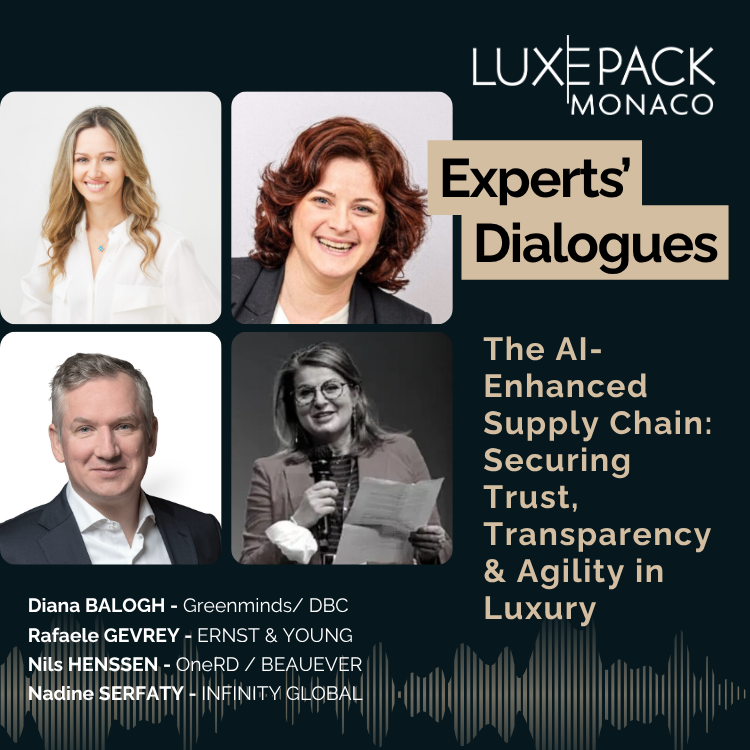
AI-Enhanced Luxury Supply Chains: Securing Trust and Agility
LUXE PACK Monaco

In a landscape where global shifts often outpace traditional product development cycles, AI-Enhanced Luxury Supply Chains have emerged as the definitive strategic lever for maintaining compliance, sustainability, and operational responsiveness. Industry leaders increasingly agree that success is not found in technology alone, but in the sophisticated symbiosis between artificial intelligence and human judgment.
This partnership fosters a realization of agility and brand integrity, ensuring that luxury remains synonymous with both excellence and accountability in a complex world.
The luxury sector is facing escalating ESG requirements that strain traditional operational processes, particularly for specialized maisons and suppliers juggling multiple roles. Artificial intelligence acts as a powerful radar, surfacing insights on new tariffs, environmental standards, and legal shifts before they are widely reported. By embedding AI into Warehouse Management Systems (WMS) and predictive analytics, brands can now optimize material flows and personalize operations through scenario-based options. This approach transforms AI into a proactive partner in regulatory strategy rather than a reactive tool, allowing inventory levels to align with evolving rules and significantly reducing compliance risks across borders.
"AI can help brands navigate complex international regulations and tariffs, often providing strategic insights before they are broadly recognized by the market." Nadine SERFATY, Infinity Global.
The Human-Centric AI Model: Decisions and Boundaries
A critical distinction in the luxury sector is that AI does not execute itself; it requires human oversight to reflect brand values. While algorithms can offer hints, scenarios, or optimized routes, the final decision remains with the human expert. The accuracy of AI suggestions hinges on well-defined boundaries that protect the brand's DNA. By combining predictive modeling with human intelligence, brands can adjust forecasts within days, ensuring that production remains lean and waste is minimized. This synergy is particularly vital in the luxury industry, where the "scarcity" of a product is a component of its value, necessitating surgical precision in stock management.
Fostering Trust and Transparency: The Luxury Paradox
The industry faces a unique paradox: the need to balance traceability the granular internal data regarding origin and transformation—with transparency, which involves the selective external disclosure required to sustain brand mystique.
Modern consumers prioritize ethical sourcing and environmental stewardship over the mere disclosure of supplier names. AI plays a pivotal role here by visualizing complex data into compelling, transparent narratives that resonate with both clients and regulators.
This data-driven storytelling reinforces trust without exposing every confidential operational detail. By feeding accurate information into AI systems, brands can craft authentic stories about their craftsmanship and material origins. This builds a foundation of trust that is essential for luxury prestige, where the "provenance" of an item is as important as the item itself.
AI as a Catalyst for Sustainability and Resource Efficiency
Sustainability in luxury depends on the radical reduction of waste and the intelligent optimization of resource use. AI-driven forecasting algorithms merge historical performance with real-time sell-out indicators to refine accuracy long before a product launch. Beyond logistics, AI is a catalyst for resilient and ethical sourcing. It can suggest alternative raw materials such as lab-grown fibers or bio-based "mushroom" fabrics while simultaneously identifying suppliers with the lowest carbon footprints and highest social compliance scores.
These innovations shift the industry from a model of reactive mitigation to one of proactive, eco-driven design. For instance, AI can analyze the mechanical properties of a new sustainable polymer and predict its behavior during the injection molding process, allowing engineers to optimize the mold design virtually and avoid the environmental cost of multiple physical trials.
The Future of Retail: Augmented Experiences and Operational Agility
Looking ahead, AI is set to transform the interface between the brand and the consumer, as well as the production floor itself. A significant portion of routine retail tasks can be automated, reallocating staff focus toward high-value customer engagement and brand storytelling.
Technologies such as RFID-enabled checkouts and AI-powered augmented experiences are redefining the shopping ritual. Virtual fitting rooms for fine jewelry and accessories allow customers to "try on" items and visualize a complete look through virtual mirrors, bridging the gap between digital convenience and physical luxury.
On the production side, AI-guided virtual reality (VR) reduces machinery changeover times and supports the smaller, more frequent lot sizes required by a market focused on personalization. This flexibility allows manufacturing to align with real-time demand, preventing the overproduction that often plagues the traditional fashion and accessories sectors.
A Multifaceted Journey Toward Excellence
The integration of AI in AI-Enhanced Luxury Supply Chains is a journey that demands a holistic transformation of the corporate mindset. It is an evolution that requires:
- AI as Augmentation: Using technology to free human creativity and focus on high-level decision-making.
- Strategic Transparency: Upholding brand allure while meeting the demand for ethical and environmental verification.
- Sustainable Innovation: Leveraging advanced sourcing and forecasting to create a regenerative business model.
- Collaborative Frameworks: Establishing a shared ecosystem where brands, suppliers, and regulators co-innovate under clear governance.
True power in the luxury sector will manifest not merely in the ability to process data, but in the collective intelligence and ethical agility that propel brands toward a resilient and sustainable future. By embracing these tools, the luxury industry ensures that the pinnacle of elegance is built upon a foundation of absolute transparency and operational excellence.